
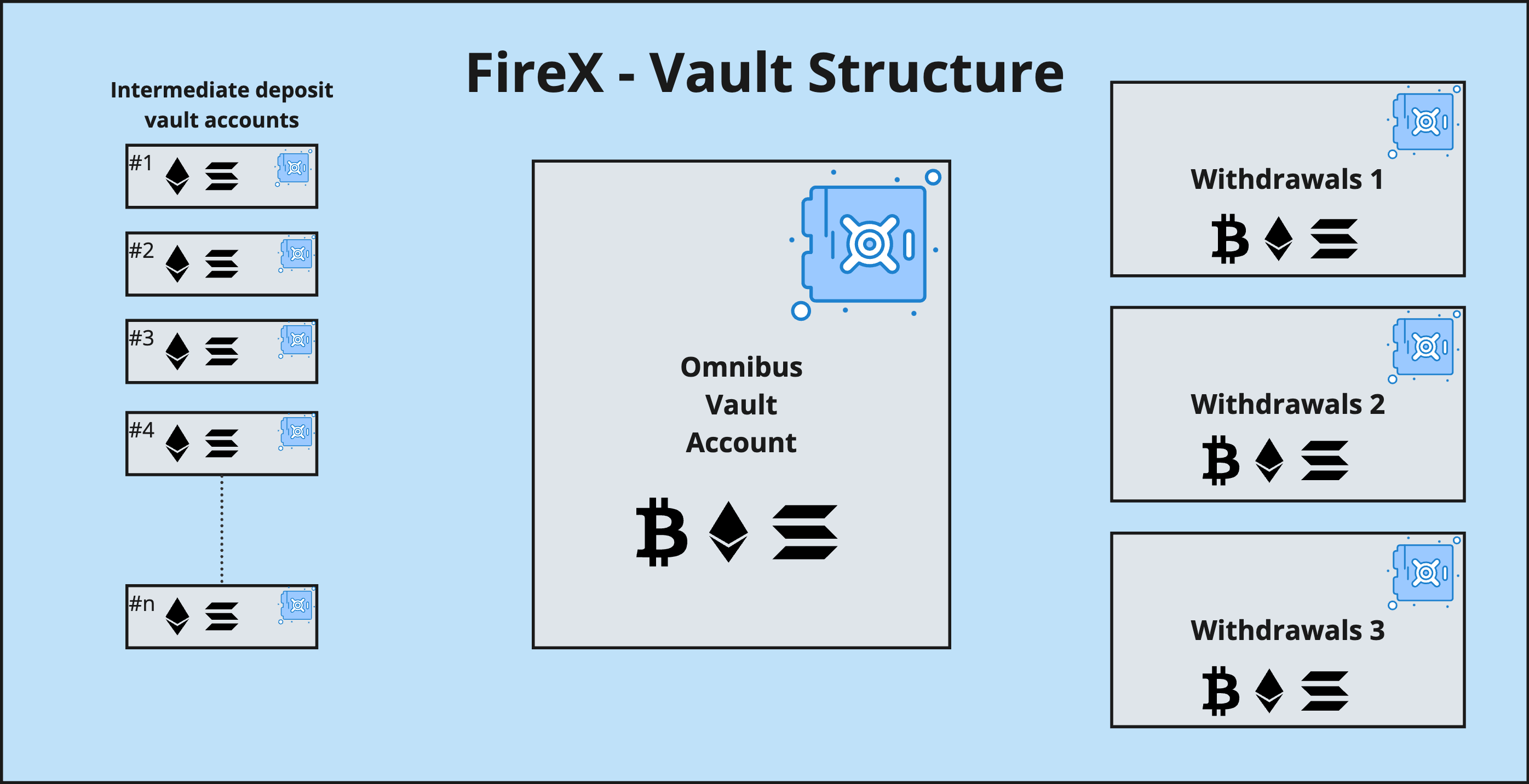
The Fireblocks Retail Demo application is designed to support Fireblocks clients by serving as a reference model for their integration processes. It embodies the best practices Fireblocks advocates for building secure, retail-facing solutions. This demo aims to accelerate and simplify the integration of Fireblocks into your projects, ensuring that you adhere to the recommended best practices when building on the Fireblocks platform. This article provides the necessary background on the considerations we had in mind when planning the demo application and developing its business logic. Vault Structure First, it’s essential to understand how to best structure your Fireblocks workspace, vault accounts, and asset wallets to serve the requirements of a retail crypto application. There are generally two main approaches for vault structuring: Omnibus and Segregated. The Omnibus vault structure is usually the more fitting selection when planning a retail-facing product, as it offers a more efficient way to handle end-user deposits, balance management, and withdrawals in fewer transactions with better fee management than using a segregated structure. In our implementation, we have used a central Omnibus vault account to hold end-user funds. UTXO-based assets (e.g., BTC) are deposited by the end-users directly into the Omnibus vault using a dedicated deposit address for each user deposit, while account-based assets (e.g., ETH) are deposited to intermediate deposit vault accounts and later swept to the Omnibus vault. Additionally, we are using three designated withdrawal vaults to allow high withdrawal throughput. Using multiple withdrawal vaults allows for more robust withdrawal handling, as withdrawal requests might queue up into a long backlog due to an unconfirmed transaction of a specific asset from a withdrawal wallet. Such backlog scenarios should be handled with dedicated business logic, but generally speaking, having several withdrawal vaults ensures your application can maintain a steady and robust withdrawal throughput. The configuration of the Fireblocks workspace vaults and wallets is done by the application’s setup script upon running the app for the first time.Documentation Index
Fetch the complete documentation index at: https://fireblocks-43c4b3ee-chore-add-cli.mintlify.app/llms.txt
Use this file to discover all available pages before exploring further.
 End-user wallets
A retail application, potentially serving millions of end-users, must be able to create and operate millions of crypto deposit addresses, assign them to the correct end-user accounts in our internal ledger, and manage their balances correctly. When planning the application, we must consider which types of assets we will support (UTXO-based / Account-based / Tag or Memo-based), as different types require different wallet creation and management approaches.
When an end-user logs in for the first time, we need to generate an account or wallet entity for that user that will hold all of their deposit addresses for the assets we support. Depending on the asset type, different business logic will occur in the backend when the user asks for a new deposit address.
For UTXO or Tag/Memo-based assets (such as BTC, ADA, etc.), we will create a new dedicated deposit address inside the Omnibus vault account and assign it to the user account in our database (our internal ledger).
For Account-based assets (such as ETH, SOL, etc.), we will create a new intermediate vault account and then create a deposit address inside this dedicated intermediate vault account whenever a user requests a new deposit address. One can improve this process by first checking if the user already has an unused vault account that doesn’t yet have the requested asset’s wallet. If such an account exists, we can use it to create the new deposit address instead of creating a new vault account each time the user requests a new address.
Additionally, as the process of generating a deposit address for account-based assets will usually require two API calls to Fireblocks (one for creating the new vault account and one for generating the deposit address), it will be beneficial to add a job-like service that will pre-create vault accounts in batches. Once an end-user requests a new deposit address, the backend process will use a ready vault account when creating the deposit address and assign it to the relevant end-user (rename the vault account with a user reference ID and update the internal ledger accordingly).
In our implementation, this business logic is mainly handled by the VaultAccount service.
Deposit Management - Sweeping and UTXO Consolidation
Another aspect we must consider when planning a retail crypto application is the sweeping of account-based assets to the Omnibus vault account. For UTXO asset deposits, we must have a mechanism that will consolidate our Omnibus wallet inputs (coming from end-user deposits) into larger UTXOs that allow more efficient processes down the line, such as internal rebalancing transactions and end-user withdrawals.
Sweeping
When designing the sweeping mechanism, we should take into account several considerations, such as:
End-user wallets
A retail application, potentially serving millions of end-users, must be able to create and operate millions of crypto deposit addresses, assign them to the correct end-user accounts in our internal ledger, and manage their balances correctly. When planning the application, we must consider which types of assets we will support (UTXO-based / Account-based / Tag or Memo-based), as different types require different wallet creation and management approaches.
When an end-user logs in for the first time, we need to generate an account or wallet entity for that user that will hold all of their deposit addresses for the assets we support. Depending on the asset type, different business logic will occur in the backend when the user asks for a new deposit address.
For UTXO or Tag/Memo-based assets (such as BTC, ADA, etc.), we will create a new dedicated deposit address inside the Omnibus vault account and assign it to the user account in our database (our internal ledger).
For Account-based assets (such as ETH, SOL, etc.), we will create a new intermediate vault account and then create a deposit address inside this dedicated intermediate vault account whenever a user requests a new deposit address. One can improve this process by first checking if the user already has an unused vault account that doesn’t yet have the requested asset’s wallet. If such an account exists, we can use it to create the new deposit address instead of creating a new vault account each time the user requests a new address.
Additionally, as the process of generating a deposit address for account-based assets will usually require two API calls to Fireblocks (one for creating the new vault account and one for generating the deposit address), it will be beneficial to add a job-like service that will pre-create vault accounts in batches. Once an end-user requests a new deposit address, the backend process will use a ready vault account when creating the deposit address and assign it to the relevant end-user (rename the vault account with a user reference ID and update the internal ledger accordingly).
In our implementation, this business logic is mainly handled by the VaultAccount service.
Deposit Management - Sweeping and UTXO Consolidation
Another aspect we must consider when planning a retail crypto application is the sweeping of account-based assets to the Omnibus vault account. For UTXO asset deposits, we must have a mechanism that will consolidate our Omnibus wallet inputs (coming from end-user deposits) into larger UTXOs that allow more efficient processes down the line, such as internal rebalancing transactions and end-user withdrawals.
Sweeping
When designing the sweeping mechanism, we should take into account several considerations, such as:
- Triggering (when should we sweep the intermediate vaults?)
- Sorting (which vaults should be swept now?)
- Gas balances (gas top-ups for token sweeping)
- Asset sweeping order (sweep tokens before base assets)
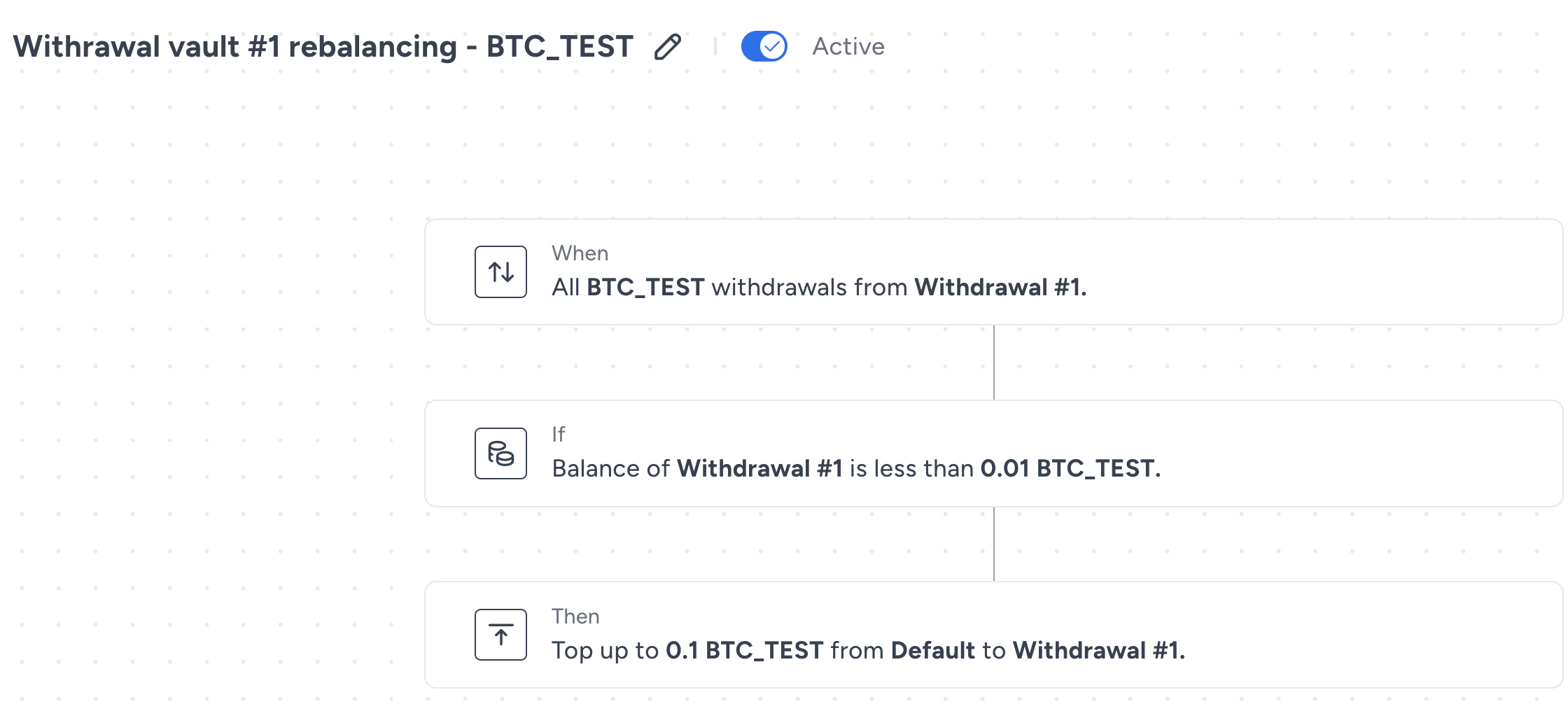 This rebalancing approach will require you to set a minimum and a maximum threshold per asset you support. The minimum threshold will be the triggering amount of a rebalancing transaction, and the maximum threshold will be the amount the withdrawal vault will be topped up to after the rebalancing transaction is completed.
End User Withdrawals
End-user withdrawals are a crucial phase in the lifecycle of a retail crypto application, deeply affecting the platform’s reputation. To handle a high volume of withdrawal requests efficiently, utilizing multiple dedicated withdrawal vault accounts is recommended. Besides this strategy, there are key considerations for robust withdrawal logic.
A solid withdrawal system should:
This rebalancing approach will require you to set a minimum and a maximum threshold per asset you support. The minimum threshold will be the triggering amount of a rebalancing transaction, and the maximum threshold will be the amount the withdrawal vault will be topped up to after the rebalancing transaction is completed.
End User Withdrawals
End-user withdrawals are a crucial phase in the lifecycle of a retail crypto application, deeply affecting the platform’s reputation. To handle a high volume of withdrawal requests efficiently, utilizing multiple dedicated withdrawal vault accounts is recommended. Besides this strategy, there are key considerations for robust withdrawal logic.
A solid withdrawal system should:
- Validate User Balances: Check that the user’s available balance is sufficient to cover the withdrawal amount and any associated fees.
- Rotate Withdrawal Vaults: Incorporate a method, such as a random selection process, to alternate between different withdrawal vault accounts as transaction sources.